
Wotagei: The Art of Supporting an Idol
From Otagei to Wotagei
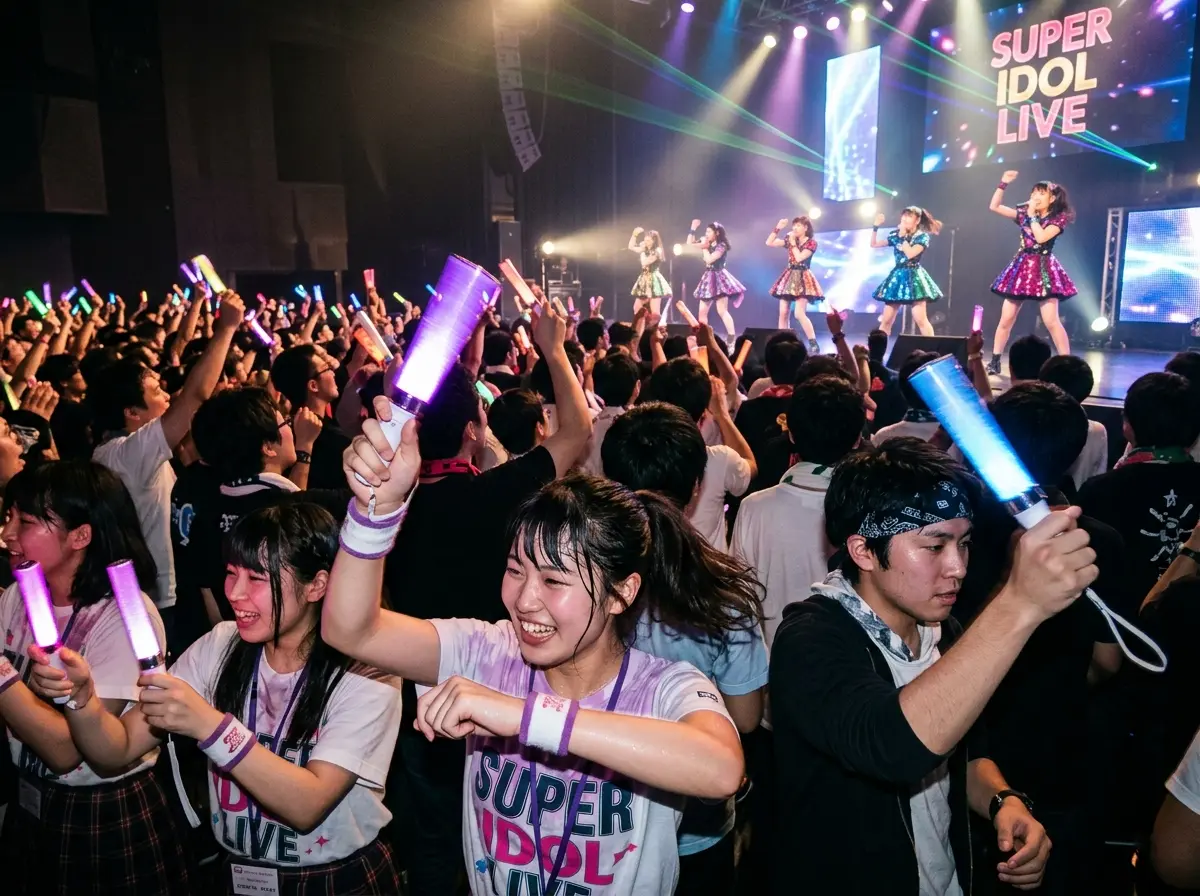
The word wotagei (ヲタ芸) comes from otaku and gei, meaning “performance” or “skill.” The practice developed within Japanese fan cultures before becoming particularly associated with idol concerts. Over time, it evolved from informal expressions of enthusiasm into a recognizable set of techniques and conventions.
The spelling with ヲ rather than the more usual オ is itself associated with the playful language of fan communities.
The Language of Calls
One of the most distinctive elements is the use of calls: shouted words, phrases and rhythmic sequences performed at specific moments in a song. Some are simple responses to the performer, while others form established patterns known as mixes.
Different groups and songs can have their own conventions. Experienced fans may know exactly when a particular call begins and how the sequence develops, making the audience sound almost like another instrument accompanying the music.
Colours and Member Identity
Penlights are not simply decorative. In many idol groups, individual members are associated with specific colours, allowing fans to display their support visually.
During a performance, an audience filled with different coloured lights can therefore create a constantly changing pattern. When a member performs a solo or takes a prominent position, fans may switch to that member’s colour.
These conventions also make membership within a group visually legible, turning individual preferences into part of the spectacle.
Wotagei as Choreography
The word wotagei can also refer to more elaborate choreographed movements performed by fans. These may involve repeated gestures, synchronized arm movements and carefully practiced sequences.
This form should not be confused with ordinary audience participation. Some wotagei performances are almost miniature dance routines, requiring considerable coordination and practice.
Dedicated performers may practice together and record their routines, creating a form of fan performance that exists alongside the idol’s own stage work.
Learning the Conventions
Much of wotagei is learned informally. Fans can observe experienced participants, practice with friends or use recordings shared online. A newcomer gradually learns not only the movements and calls, but also when they are appropriate.
This shared knowledge gives each fan community its own character. Knowing the conventions means understanding how to participate without disrupting the performance, while also recognizing the traditions that have developed around a particular group or song.
Wotagei is therefore not a single fixed routine. It is a living collection of practices, constantly adapted by fans and passed from one generation of supporters to the next.
Idols in Anime
Lynn Minmay: The Voice of Macross
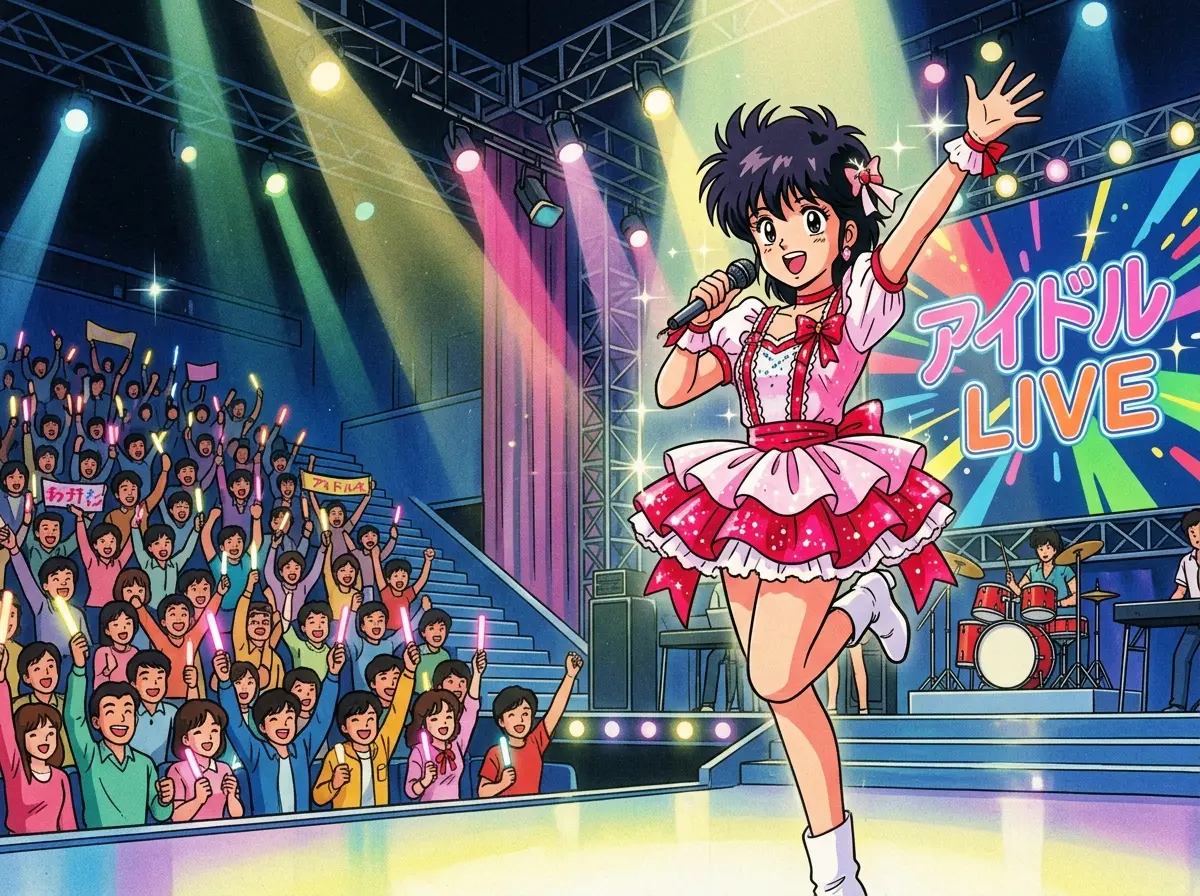
Lynn Minmay, from The Super Dimension Fortress Macross (1982), is one of the earliest anime characters to embody the modern idea of the idol. She begins as an ordinary young woman but becomes a hugely popular singer whose music acquires unexpected importance during the war.
Minmay is significant because her fame is not simply part of the setting: her songs and public image become elements of the story itself. The series established a model in which an idol could influence events within the fictional world while remaining a recognizably imperfect performer.
Creamy Mami and the Magical Idol
Magical Angel Creamy Mami (1983) combined two popular Japanese traditions: the magical girl and the idol. Eleven-year-old Yū Morisawa gains the ability to transform into the older and glamorous Creamy Mami, quickly becoming a successful singer. The series plays with the contrast between the ordinary girl and her public identity. Creamy Mami’s career develops alongside Yū’s everyday life, creating a double identity that became one of the defining features of the genre.
Magical Emi and the Idol Dream
Magical Star Magical Emi (1985) followed a similar formula. Mai Kazuki, a young aspiring magician, gains the ability to transform into the older Magical Emi and unexpectedly becomes a professional performer.
The series belongs to the short-lived but influential tradition of magical-girl shows built around fictional idol careers. Like Creamy Mami, it presented stardom as something both exciting and demanding, while making the process of becoming an entertainer part of the story.
From Magical Girls to School Idols
Later series gradually moved away from magic and toward more realistic forms of aspiration. Aikatsu! (2012) follows young girls training to become professional idols, introducing auditions, performances, competition and the development of stage identities.
Love Live! took another approach with the concept of the school idol: students who create and perform as an idol group while remaining part of ordinary school life. The model became one of the defining forms of contemporary idol anime.
The Modern Idol Universe
Franchises such as The Idolmaster expanded the concept further, presenting large casts of individual idols with different personalities, ambitions and careers. Music, games, anime and live performances became parts of a single expanding universe.
More recent works have also used the idol figure to examine the darker side of celebrity. Oshi no Ko, for example, explores the construction of public personas, fan expectations and the pressures surrounding the entertainment industry. From Lynn Minmay to today’s multimedia franchises, anime has repeatedly reinvented the idol. Sometimes she is a pop star who changes the course of a war; sometimes a magical alter ego, a schoolgirl or a professional entertainer. What remains constant is the idea of a performer whose story continues beyond the stage.
Leave a Reply