
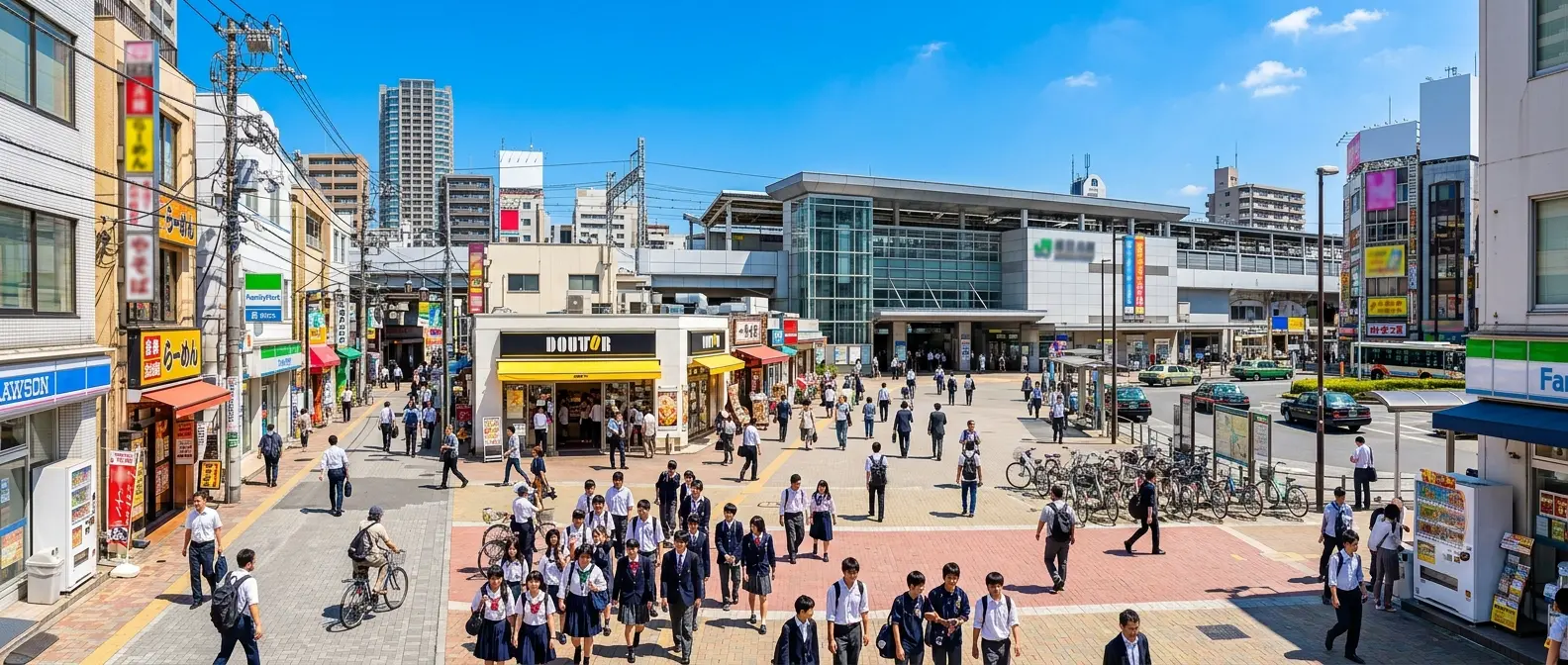
In Japan, railway stations are not simply points of arrival and departure. They are among the most important spaces of everyday urban life, places where transportation, commerce, social interaction and neighbourhood identity come together.
From enormous hubs serving millions of passengers every day to small local stations surrounded by residential streets, the areas around railway stations reveal a distinctive characteristic of Japanese cities: urban life often develops around movement.
The station is not only a gateway to another destination. It is frequently the centre of the community that surrounds it.
Demo Content Notice
Every article on this website is created to showcase the design features and content possibilities of this WordPress theme. The content about Japan is provided for illustrative purposes, may include simplified descriptions or minor inaccuracies, and should not be considered a substitute for official or authoritative sources.
The Meaning of Ekimae
The area directly in front of a station is known as ekimae (駅前), literally “in front of the station”. In many Japanese cities, this space functions as a natural meeting point where different aspects of daily life converge.
Restaurants, cafés, convenience stores, supermarkets, banks and shopping streets are often concentrated around station entrances. For residents, the station area is where many ordinary activities happen: buying groceries on the way home, meeting friends after work or stopping for a meal before returning home.
Unlike urban planning models where transportation areas are separated from commercial districts, Japanese stations often become the heart of the neighbourhood itself.
Stations as Miniature Cities
The largest stations in Japan can feel like cities within cities. Complexes such as major Tokyo railway hubs combine train platforms with department stores, restaurants, underground shopping areas and entertainment facilities.
Passengers may spend hours inside these environments without simply passing through. They can shop, eat, work, meet others or explore different areas of the station complex.
This integration between transportation and commerce reflects a practical approach to urban design: spaces used by millions of people every day are also designed to serve their broader needs.
The station is not treated as an interruption in the city, but as one of its most active environments.
The Culture of the Daily Commute
For many people living in Japanese cities, railway stations are part of a daily rhythm repeated over years. The morning commute, the evening return home and the familiar routes between platforms and neighbourhood streets create a strong sense of routine.
Small details become part of this experience: the convenience store near the entrance, the café where commuters stop regularly, the familiar announcements or the seasonal decorations placed around the station.
These repeated encounters create a relationship between people and places. A station can become associated with personal memories, everyday habits and a sense of belonging.
The Life Around Local Stations
While major stations receive international attention, smaller stations often reveal another side of Japanese urban culture.
Around many local stations, traditional shopping streets (shotengai, 商店街), small restaurants and family businesses continue to serve the surrounding community. These areas are less intense than the huge urban centres, but they often preserve a stronger connection between the station and local residents.
The railway line shapes the neighbourhood: houses, shops and services develop according to the movement of people arriving and leaving each day.
In this way, the station becomes not only a transportation facility but a foundation around which community life is organised.
Food, Trains and Everyday Traditions
Japanese railway culture has also created its own traditions. One of the most recognisable is the ekiben (駅弁), the special boxed meals sold at stations and on trains.
Originally created for travellers during long journeys, ekiben have become a reflection of regional identity, with local ingredients and specialties presented as part of the travel experience.
Even food purchased at a station can therefore become connected to place, memory and movement.
Railways as Urban Organisers
The importance of railway stations in Japan is closely connected to the history of urban development. Many private railway companies have played a major role in shaping neighbourhoods by building not only train lines, but also residential areas, shopping centres and commercial districts around their stations.
This relationship between railways and urban growth helped create cities where many daily activities can be reached through public transportation.
The station became more than infrastructure: it became a framework around which modern Japanese urban life developed.
Spaces of Connection
Railway stations represent one of the clearest examples of how Japanese cities combine efficiency and human experience.
They are places of constant movement, but also places where people stop. They connect distant areas, but also create local communities. They serve millions of passengers, while remaining tied to the identity of individual neighbourhoods.
Looking at life around Japanese railway stations means understanding a different way of experiencing the city: one where transportation is not separate from everyday life, but deeply woven into it.