
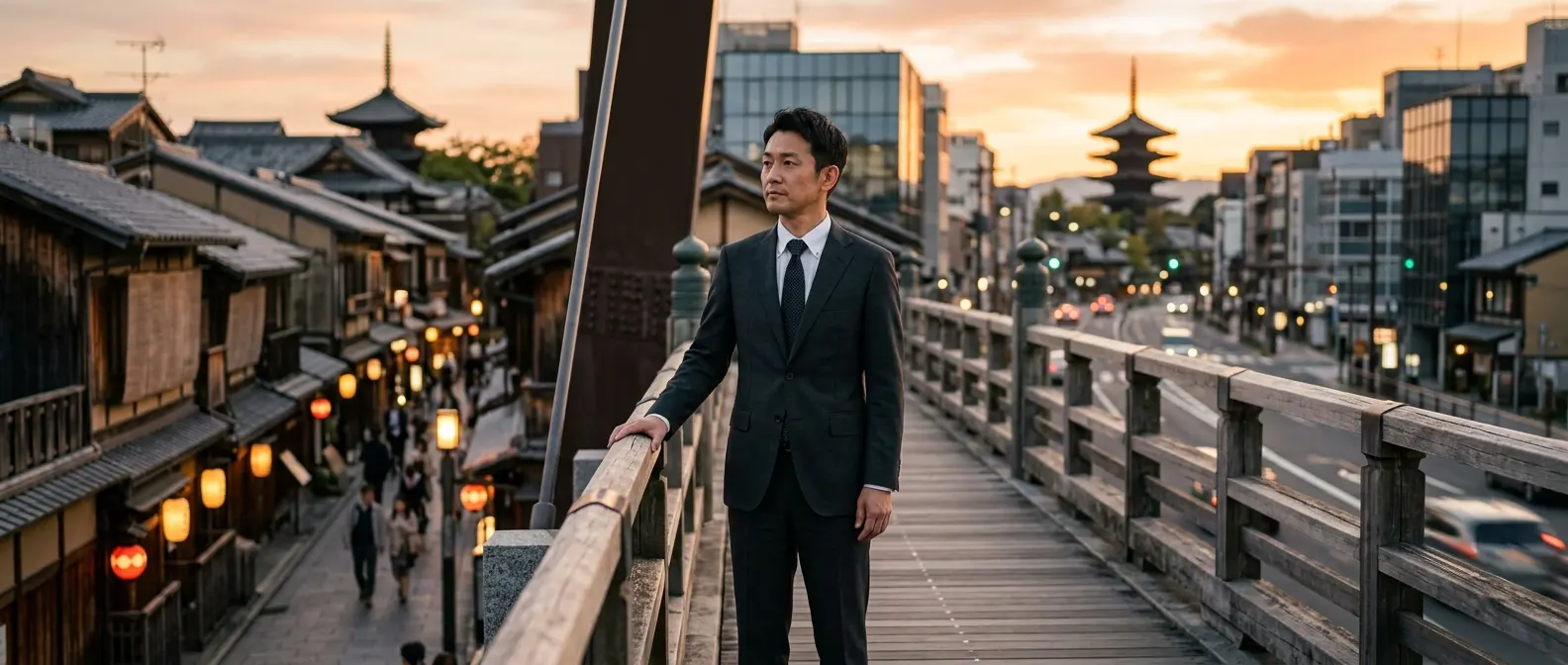
Human decisions are rarely shaped by a single force. Personal desires, emotional bonds and social responsibilities often pull people in different directions, creating situations where there is no simple distinction between what is right and what is wrong.
Japanese culture has long explored this tension through the concepts of giri (義理) and ninjo (人情). Often translated as “duty” and “human feeling,” these two ideas describe the relationship between social obligations and personal emotions.
However, giri and ninjo are not simply a contrast between rules and freedom, or between society and the individual. They reflect a more complex understanding of human relationships, where people are connected through networks of gratitude, responsibility and emotional attachment.
The tension between these two forces has appeared throughout Japanese literature, theatre and everyday life, revealing a recurring question: how can individuals balance what they owe to others with what they truly feel?
Demo Content Notice
Every article on this website is created to showcase the design features and content possibilities of this WordPress theme. The content about Japan is provided for illustrative purposes, may include simplified descriptions or minor inaccuracies, and should not be considered a substitute for official or authoritative sources.
The Origins of Giri: From Gratitude to Obligation
To understand giri, it is necessary to consider the related concept of on (恩).
On refers to a benefit, kindness or support received from another person — something that creates a moral debt. It may come from parents, teachers, employers, mentors or anyone who has provided meaningful assistance.
Giri develops from the awareness of this debt. It represents the responsibility to acknowledge, repay or honour the relationship created by what has been received.
In this sense, giri is not originally based on simple obedience. It emerges from reciprocity: a person recognises that their life is shaped by the contributions of others and feels a responsibility to respond.
This idea has historically played an important role in Japanese social relationships, where loyalty and mutual obligation helped maintain connections between individuals, families and groups.
The Meaning of Giri
In everyday life, giri can appear through many forms of responsibility: returning a favour, respecting a commitment, supporting colleagues or maintaining trust within a relationship.
At its positive side, giri can be understood as a form of care. It encourages people to recognise that relationships require effort and that personal actions affect others.
However, giri is not always experienced as a voluntary expression of gratitude. Because obligations are connected to social expectations, they can also become sources of pressure.
The same sense of responsibility that strengthens relationships can make it difficult to refuse requests, distance oneself from expectations or prioritise personal needs.
Examples can be found in modern customs such as giri-choko (義理チョコ), the obligation to give chocolate to colleagues or acquaintances on Valentine’s Day, or in workplace situations where employees feel expected to participate in social events outside working hours.
These practices show the ambivalent nature of giri: it can represent respect and consideration, but it can also create social pressure.
The Meaning of Ninjo
Ninjo represents the emotional and personal dimension of human experience. It includes affection, compassion, personal wishes and the feelings that naturally arise from individual circumstances.
While giri concerns what a person feels responsible for doing, ninjo reflects what they genuinely feel.
The importance of ninjo lies in recognising that people cannot be reduced to their social roles. Behind every obligation exists an individual with emotions, desires and personal struggles.
When giri and ninjo are aligned, there is little conflict. Helping someone close may be both a responsibility and an authentic expression of affection.
The tension appears when the two move in opposite directions: when personal emotions suggest one path while social responsibilities require another.
A Central Theme in Literature and Theatre
The conflict between giri and ninjo became one of the most important themes in traditional Japanese literature and theatre, particularly during the Edo period.
Dramas often portrayed characters caught between personal happiness and obligations toward family, society or established relationships. These stories did not present one side as completely correct and the other as wrong. Instead, they explored the emotional difficulty of situations where every possible choice involved sacrifice.
This theme appears especially in the works of Chikamatsu Monzaemon, whose puppet theatre dramas frequently depicted ordinary people facing conflicts between social duty and personal feelings.
The emotional power of these stories came from their refusal to offer easy solutions. A character could be respected for fulfilling an obligation while still deserving compassion for the personal cost of that decision.
Giri and Ninjo in Contemporary Life
Although Japanese society has changed considerably, the tension between giri and ninjo remains visible today.
The workplace provides one of the clearest examples. Dedication to a company, loyalty toward colleagues and willingness to support the group can reflect giri. These values have historically contributed to strong cooperation and collective responsibility.
At the same time, excessive expectations can create difficulties when professional obligations conflict with personal wellbeing. Long working hours, pressure to participate in company activities and the expectation of putting the group before oneself can transform giri into a source of stress.
In this context, ninjo represents the individual perspective: the desire for personal time, emotional balance and a life beyond professional responsibilities.
Modern debates about work-life balance in Japan show that the relationship between giri and ninjo is not fixed. New generations increasingly question whether every obligation must be accepted and seek ways to preserve both social responsibility and individual wellbeing.
Between Duty and Emotion
Giri and ninjo offer a perspective in which human choices exist between personal desire and social connection.
They show that responsibility is not always the opposite of freedom. Commitments toward others can create meaning, trust and belonging. However, they also reveal that obligations can become restrictive when they leave no space for individual needs.
The balance between giri and ninjo is therefore not a simple choice between duty and emotion. It is an ongoing negotiation between the relationships that shape our lives and the feelings that define us as individuals.
By exploring this tension, Japanese culture highlights a universal question: how can people remain connected to others without losing connection with themselves?
5 responses to “Giri and Ninjo: Between Duty and Emotion”
The distinction between giri and ninjo is fascinating, especially because the two concepts don’t seem to be completely opposed. In many situations, the emotional choice and the sense of duty seem to coexist rather than simply cancel each other out.
I agree. What I found particularly interesting is the idea that choosing giri does not necessarily mean that the feelings behind ninjo disappear. The conflict seems to come from having to decide which one should take priority.
That’s what I found interesting too. Perhaps the real conflict isn’t between duty and emotion themselves, but between two different ideas of what a person should do.
This also made me think about how differently we might interpret the same situation today. Do you think the tension between giri and ninjo still plays an important role in contemporary Japanese society?
That’s an interesting question. Perhaps the concepts are still relevant, even if the situations in which people experience that conflict have changed considerably.