
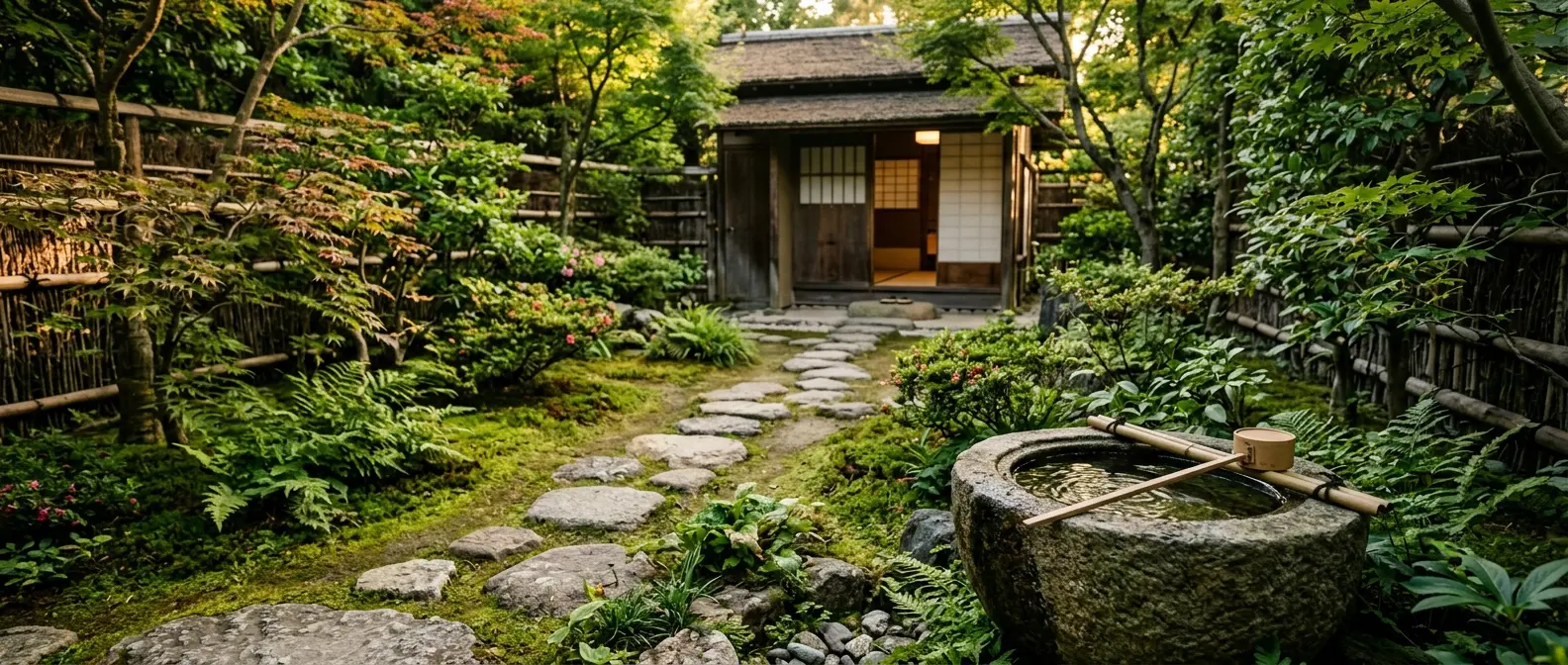
Before entering a traditional Japanese tea room, guests do not simply cross a doorway. They follow a carefully designed path that gradually separates them from the distractions of everyday life and prepares them for a different kind of experience.
Known as roji (露地), the tea garden is not merely an approach to a building. It is a transitional landscape where movement, architecture and nature work together to create a sense of calm and attentiveness. Every element, from the arrangement of stepping stones to the placement of plants and lanterns, contributes to a journey that begins before the tea ceremony itself.
The path to the tea house reveals one of the most distinctive principles of Japanese garden design: a landscape can influence not only what people see, but also how they feel and behave.
Demo Content Notice
Every article on this website is created to showcase the design features and content possibilities of this WordPress theme. The content about Japan is provided for illustrative purposes, may include simplified descriptions or minor inaccuracies, and should not be considered a substitute for official or authoritative sources.
A Garden Between Two Worlds
The word roji is often translated as “dewy path”, a name that evokes freshness, simplicity and a connection with the natural world. Within the context of the tea ceremony, however, its meaning extends beyond the physical pathway. The garden represents a gradual passage from the ordinary world into a space of concentration, hospitality and shared attention.
Unlike gardens created primarily for viewing, the roji is experienced through movement. Visitors walk through it slowly, following a sequence of spaces that encourages them to leave behind the pace and concerns of daily life.
This transformation does not happen through dramatic effects. The tea garden avoids excess and relies instead on subtle changes: the texture of stone beneath the feet, the sound of footsteps, the filtered light through vegetation and the quiet presence of natural materials.
The journey itself becomes part of the ceremony.
Designing the Experience of Walking
Every component of the roji has a practical and symbolic role. The stepping stones, known as tobiishi, guide visitors along the path while encouraging a slower and more deliberate pace. Their irregular arrangement prevents hurried movement and directs attention toward each individual step.
Stone lanterns, plants and carefully placed features create a sense of balance without overwhelming the landscape. Unlike decorative gardens designed to display abundance, the tea garden uses restraint to create an atmosphere of simplicity and focus.
A particularly meaningful element is the tsukubai, a stone basin traditionally used by guests to rinse their hands before entering the tea room. The act of purification is both practical and symbolic: it marks the transition between the outside world and the quiet environment of the ceremony.
Through these carefully considered details, the garden prepares the visitor physically and mentally.
Sen no Rikyū and the Beauty of Simplicity
The development of the tea garden is closely connected with the aesthetic ideas of Sen no Rikyū, whose influence transformed the tea ceremony during the sixteenth century.
Rikyū rejected unnecessary displays of wealth and emphasized simplicity, natural materials and a sense of humble refinement. The roji reflected these values by becoming a space where carefully controlled design appeared almost effortless.
Rather than creating a perfect landscape separated from nature, the tea garden sought harmony with seasonal changes and natural irregularities. Moss, weathered stones, wooden structures and simple vegetation were appreciated for their authenticity and ability to express the passage of time.
This approach helped establish a new understanding of beauty, where modesty and imperfection could become sources of elegance.
The Architecture of Transition
The relationship between the roji and the tea house demonstrates how Japanese design often treats space as a sequence of experiences rather than isolated objects.
The garden does not simply lead to the entrance; it creates a gradual preparation for arrival. The path may include a waiting area where guests pause before entering, allowing the transition to continue even after the physical journey has ended.
The small scale of the tea house, the natural materials of the garden and the controlled movement between spaces all contribute to a feeling of intimacy. The boundary between landscape and architecture becomes subtle, with each element supporting the atmosphere of the whole.
This relationship between approach, entrance and interior space has influenced many areas of Japanese design, from traditional residences to contemporary architecture.
When the Journey Becomes Part of the Ritual
The importance of the roji lies in the fact that it changes the meaning of arrival. Entering the tea house is not a sudden transition but the conclusion of a process that has already begun outside.
Walking through the garden encourages awareness of small details and creates a rhythm different from ordinary movement. The visitor is invited to observe, slow down and become fully present before any words are exchanged or tea is prepared.
This idea remains relevant beyond the context of chanoyu. The tea garden demonstrates how thoughtfully designed spaces can shape human experience, using simplicity, proportion and natural elements to create moments of reflection.
The path to the tea house is therefore more than an entrance. It is a reminder that meaningful experiences often begin before the destination is reached.