
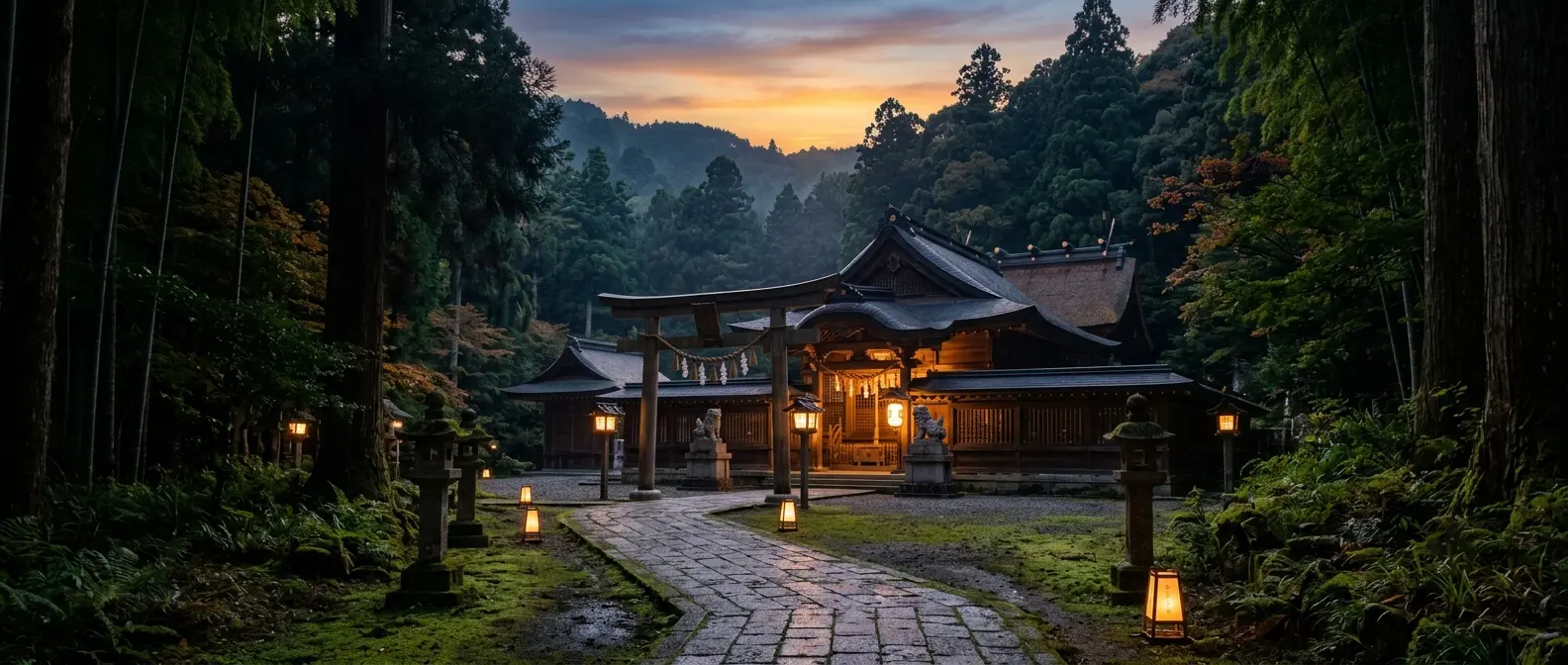
In Japan, forests are often more than natural environments. Around many Shinto shrines, trees and wooded areas have been preserved as sacred spaces where the boundary between the human world and the spiritual realm becomes less distinct.
Ancient trees, quiet groves and paths surrounded by vegetation are not simply decorative elements of religious sites. They represent a way of understanding nature as something worthy of respect and attention. Within these landscapes, the presence of the sacred is not separated from the environment, but experienced through it.
From enormous cedar trees that have stood for centuries to preserved forests surrounding major shrines, these places reveal a distinctive relationship between spirituality, architecture and the natural world.
Demo Content Notice
Every article on this website is created to showcase the design features and content possibilities of this WordPress theme. The content about Japan is provided for illustrative purposes, may include simplified descriptions or minor inaccuracies, and should not be considered a substitute for official or authoritative sources.
The Sacred Forests of Shinto Shrines
One of the most characteristic elements of Japanese sacred landscapes is the chinju no mori (鎮守の森), the forest traditionally preserved around a shrine as a protective grove.
Unlike a garden created according to a deliberate aesthetic design, a sacred forest is valued for its continuity and presence. The trees surrounding a shrine create an atmosphere of separation from everyday life, preparing visitors to enter a different kind of space.
These forests often existed before the current buildings of a shrine were constructed. Their importance comes not only from their age or beauty, but from the belief that natural places can possess spiritual significance.
In Shinto traditions, sacredness is not necessarily limited to buildings or objects created by humans. Mountains, rivers, waterfalls and trees can all become associated with kami (神), the spiritual forces believed to inhabit and influence the world.
Shinboku: Trees as Sacred Presences
Among the most recognisable symbols of this relationship are shinboku (神木), sacred trees that are believed to embody a special spiritual presence.
These trees are often marked with a shimenawa (注連縄), a sacred rope that indicates their connection with the divine. The rope does not transform the tree into an object of worship in itself; rather, it signals that the tree should be approached with respect as a place of spiritual significance.
Many sacred trees are remarkable not only because of their size, but because of their age. Some have survived for centuries, becoming living witnesses to the history of the communities that have protected them.
Their longevity gives them a symbolic importance. A tree that has existed through many generations represents continuity, resilience and a connection between past and present.
The Great Cedar of Tadasu no Mori
One example of a sacred forest deeply connected with Japanese tradition is Tadasu no Mori (糺の森), the ancient woodland surrounding Shimogamo Jinja in Kyoto.
Located near the meeting point of the Kamo rivers, this forest has preserved a natural environment within one of Japan’s most historic cities. Its trees create a quiet landscape that contrasts with the urban surroundings, allowing visitors to experience a sense of transition before reaching the shrine.
The importance of Tadasu no Mori lies not only in its beauty, but in its role as a surviving example of an ancient sacred grove. It demonstrates how natural areas can remain protected through cultural and spiritual values rather than only through modern conservation ideas.
Kasuga Taisha and the Forest of Nara
Another important example can be found at Kasuga Taisha in Nara, where the shrine is closely connected with the ancient forest of Mount Kasuga.
The forest surrounding the shrine has been protected for centuries, and its preservation reflects the belief that the landscape itself forms part of the sacred environment. The relationship between the shrine and the forest is not based on separation, but on coexistence.
Walking through this landscape, visitors encounter stone lanterns, ancient trees and pathways gradually absorbed by vegetation. The forest does not simply provide a setting for the shrine; it contributes to its identity and atmosphere.
This connection between religious practice and environmental preservation is one reason why places such as Kasuga Taisha continue to offer a unique experience of Japanese sacred landscapes.
Trees, Time and Memory
Sacred trees also express a particular Japanese appreciation for time. Unlike human structures, which can be rebuilt or restored, ancient trees carry a continuous physical presence that connects different generations.
Their importance is not based only on historical events associated with them, but on the experience of standing before something that has existed far beyond an individual human lifespan.
This awareness of time appears throughout Japanese aesthetics and traditions. The value of an object or place is not always found in perfection or permanence, but in the traces of existence, change and continuity that it carries.
A centuries-old tree therefore becomes more than a natural monument. It becomes a point of connection between human lives, history and the wider world.
Protecting Sacred Landscapes in Modern Japan
The survival of sacred forests is also connected with changing ideas about conservation. Many of these areas have been preserved because religious traditions encouraged careful relationships with the natural environment long before modern ecological movements emerged.
Today, sacred groves face new challenges, including urban expansion, climate change and the difficulty of maintaining ancient ecosystems. Their protection requires balancing cultural heritage with environmental responsibility.
The continued existence of these forests demonstrates how spiritual values can contribute to the preservation of natural spaces. They remind us that landscapes are not only resources to be used, but places that can hold memory, meaning and identity.
A Living Connection Between Nature and the Sacred
Forest shrines and sacred trees reveal a distinctive aspect of Japanese traditions: the sacred is often encountered not through distance from nature, but through closeness to it.
A quiet path beneath old trees, the presence of a centuries-old cedar or the atmosphere of a forest surrounding a shrine can create a sense of connection that goes beyond architecture and ritual.
These landscapes continue to inspire visitors because they offer an experience that is both cultural and deeply personal. They preserve a vision of the natural world in which trees are not merely part of the scenery, but participants in a relationship between humans, history and the unseen forces of nature.