
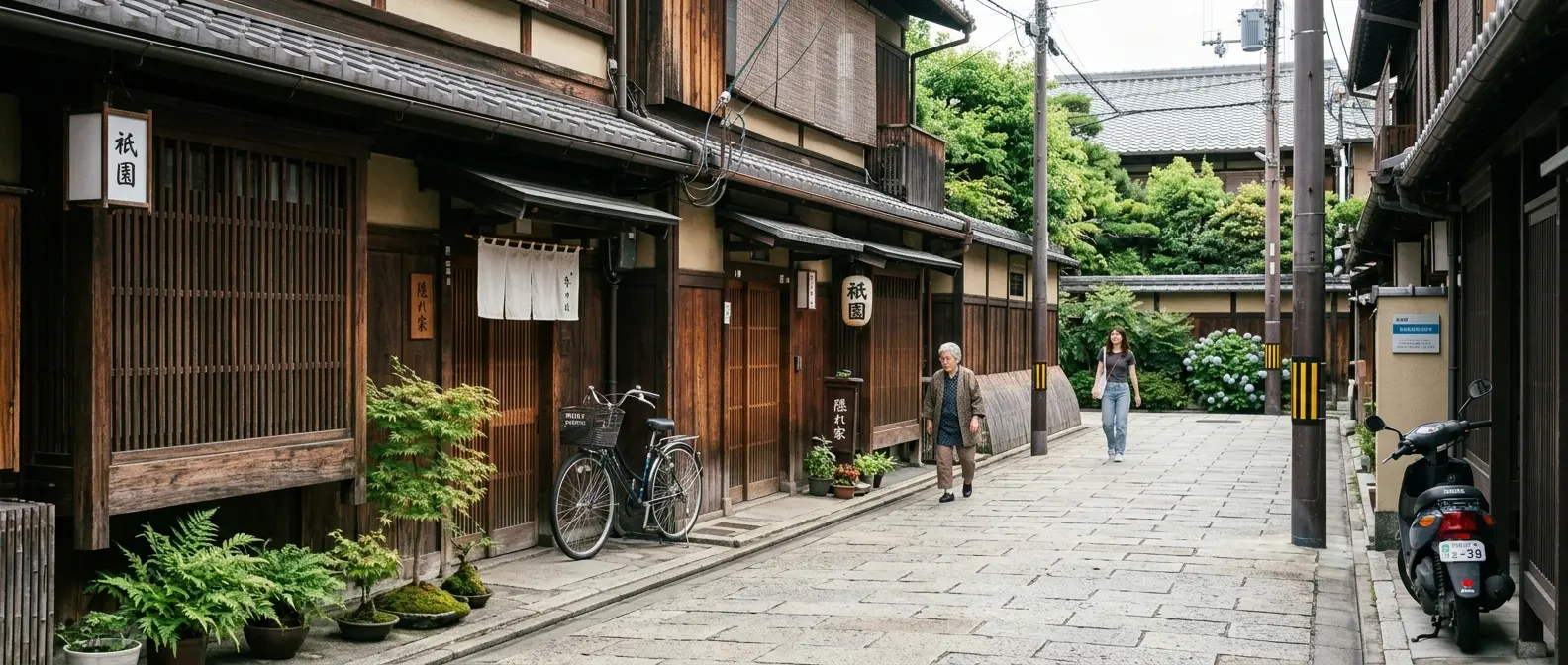
Kyoto is often associated with its most famous landmarks: ancient temples, elegant gardens and traditional neighbourhoods that attract visitors from around the world. Yet beyond these well-known destinations lies another city, formed by narrow streets, quiet passages and residential areas where everyday life continues at a slower rhythm.
These hidden corners reveal a different side of Kyoto. They are not preserved as museum-like spaces, but as living environments where traditional architecture, local communities and modern life coexist.
Walking through these streets means discovering a city shaped not only by its historical monuments, but also by the small details that surround ordinary moments.
Demo Content Notice
Every article on this website is created to showcase the design features and content possibilities of this WordPress theme. The content about Japan is provided for illustrative purposes, may include simplified descriptions or minor inaccuracies, and should not be considered a substitute for official or authoritative sources.
The World of the Roji
Among the most characteristic elements of Kyoto’s urban landscape are the roji (路地), narrow lanes that connect larger streets with residential areas, small shops and traditional houses.
The word originally referred to paths leading to tea houses, where guests would leave behind the outside world before entering a space dedicated to the tea ceremony. Over time, the term came to describe many of the smaller passages that form part of Kyoto’s urban fabric.
Unlike large avenues designed for movement and efficiency, roji encourage a slower experience of the city. Their limited scale creates a sense of intimacy, where details such as wooden walls, gardens, entrances and seasonal plants become part of everyday surroundings.
These streets demonstrate a different approach to urban space: one where atmosphere and human scale are as important as function.
Beyond the Famous Kyoto
The image of Kyoto often focuses on temples, shrines and historic districts, but much of the city’s character can be found away from the main tourist routes.
Neighbourhoods such as Nishijin preserve the atmosphere of traditional craft communities, where narrow streets still reflect the relationship between homes and workshops. Areas around old merchant districts also reveal traces of the city’s past through renovated machiya (町家), traditional wooden townhouses that once served as both residences and places of business.
These areas are not simply examples of historical architecture. They show how traditions can adapt to contemporary life without disappearing completely.
A small café inside an old building, a workshop behind a wooden façade or a family residence beside a modern apartment can all exist within the same street, creating the layered character that defines Kyoto.
Machiya: Houses Between Past and Present
The machiya are among the most recognisable elements of Kyoto’s traditional neighbourhoods. These narrow wooden houses were designed to fit within the limited space of the city while combining residential and commercial functions.
Their characteristic structure often includes a small street-facing frontage, deep interiors and internal gardens that provide light, ventilation and a connection with nature.
Although many machiya have disappeared over time, others have been restored and given new purposes. Some now host restaurants, galleries, workshops or guesthouses, allowing traditional spaces to remain part of the city’s contemporary life.
Their survival reflects an important aspect of Kyoto’s urban identity: preservation does not always mean freezing the past. Sometimes it means allowing historical spaces to continue changing while maintaining their original character.
The Beauty of Small Details
One of the pleasures of exploring Kyoto’s quieter streets is discovering details that might easily be overlooked.
A wooden entrance, a small stone path, a carefully maintained garden or a seasonal decoration can reveal the attention given to everyday surroundings. These elements do not exist as isolated works of art; they are integrated into daily life.
This sensitivity toward small details reflects a broader Japanese appreciation for atmosphere and imperfection. The value of a place is not determined only by its size or fame, but also by the feelings it creates.
In hidden streets, Kyoto’s identity emerges through subtle encounters rather than spectacular views.
A Living Urban Heritage
The hidden streets of Kyoto show that historical cities are not preserved only through monuments. They survive through communities, habits and the continued use of traditional spaces.
The challenge for modern Kyoto is maintaining this balance between preservation and adaptation. Rising costs, tourism pressure and urban development have transformed many neighbourhoods, but efforts to protect traditional areas continue.
The most authentic experiences of Kyoto are often found not in searching for something untouched by time, but in observing how the old and the new exist together.
Discovering the Quiet Side of Kyoto
The hidden streets of Kyoto offer a different way of understanding the city. They reveal that culture is not contained only inside temples, museums or historic buildings, but also exists in ordinary places shaped by generations of residents.
Behind the famous image of Kyoto lies a quieter urban landscape: one of wooden houses, narrow paths and small encounters.
These streets remind us that a city’s true character is often found not in its most visible landmarks, but in the spaces where everyday life continues.