
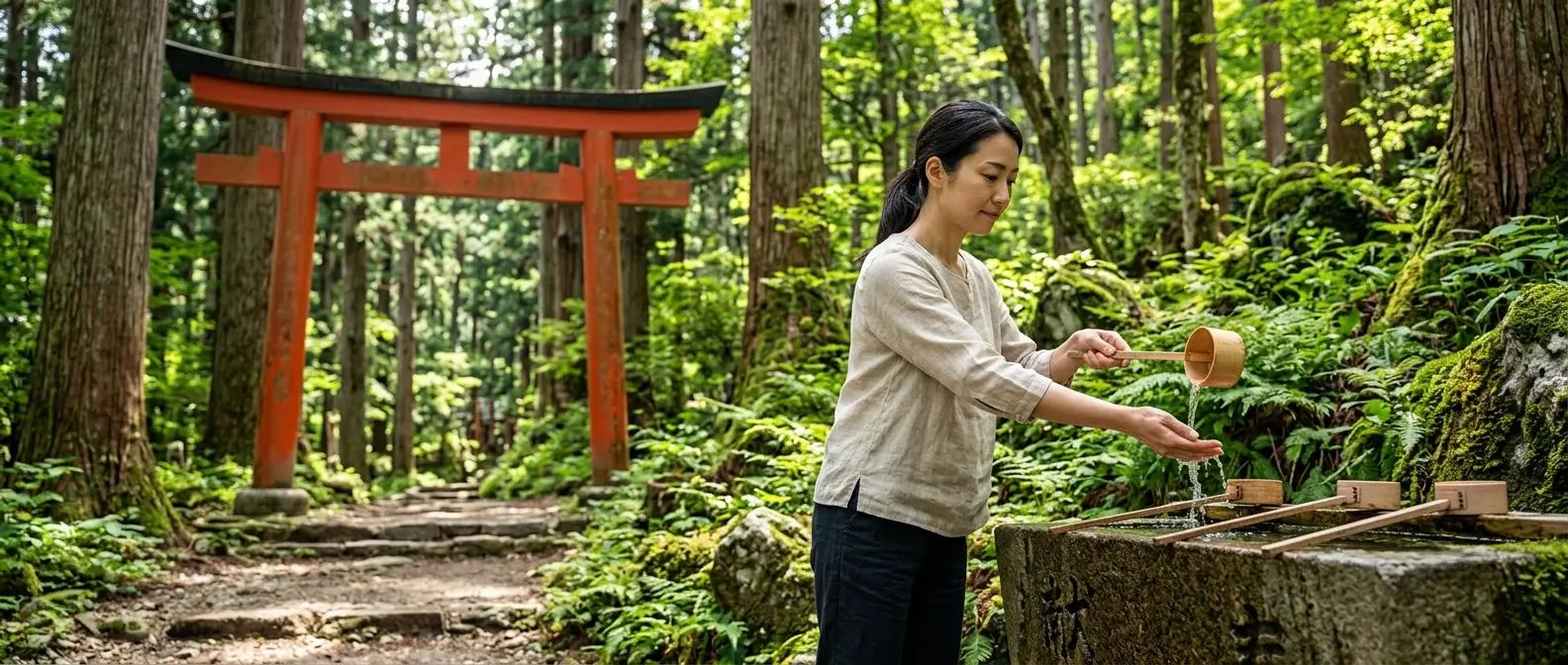
In Japan, rituals of purification are deeply connected with the relationship between human beings, nature and the sacred. Rather than representing a strict separation between ordinary life and spirituality, these practices create moments of awareness, preparation and respect.
Many of these traditions are associated with Shinto, the indigenous spiritual tradition of Japan, where sacred presence is often found in natural elements, places and unseen forces known as kami (神). Through simple gestures such as washing, bowing or making offerings, people acknowledge their connection with a world that extends beyond the individual.
Purification is not only a religious practice. It is also a way of preparing oneself mentally and physically before entering a sacred space or participating in an important moment.
Demo Content Notice
Every article on this website is created to showcase the design features and content possibilities of this WordPress theme. The content about Japan is provided for illustrative purposes, may include simplified descriptions or minor inaccuracies, and should not be considered a substitute for official or authoritative sources.
The Meaning of Purity in Shinto
The concept of purity occupies a central role in Shinto. Rather than describing moral perfection, purity refers to a state of balance and harmony that allows people to approach the sacred with respect.
Traditional beliefs distinguish between states of purity and forms of kegare (穢れ), often translated as impurity or pollution. This does not necessarily refer to wrongdoing, but to conditions that disturb harmony, including contact with death, illness or misfortune.
Purification rituals restore balance and prepare individuals to reconnect with the sacred. Through these actions, people symbolically remove what separates them from a state of clarity and awareness.
Purification is also closely connected with the natural world. Rivers, waterfalls and the ocean have traditionally been regarded as powerful elements of renewal, not only because of their physical properties but because they represent movement, transformation and continuity.
This connection reflects a broader Shinto view in which the sacred is not separated from the environment, but exists in relationship with the natural world.
Washing Before Entering Sacred Space
One of the most common examples of purification can be found at the entrance of Shinto shrines. Before approaching the main sanctuary, visitors often perform temizu (手水), a ritual cleansing of the hands and mouth.
At a temizuya (手水舎), a water pavilion usually located near the entrance of a shrine, visitors use a ladle called a hishaku (柄杓) to rinse their hands and symbolically purify themselves before prayer.
The ritual is simple, but its meaning is profound. The act of washing is not only physical; it represents a transition from the ordinary world into a space where greater attention and respect are required.
Through this small gesture, visitors become conscious of their presence and their relationship with the sacred environment around them.
Prayer, Offerings and Respect
After purification, visitors may approach the main shrine building to offer prayers. The typical sequence involves bowing, making an offering, clapping twice and bowing again, although practices can vary depending on the shrine and tradition.
Offerings may include coins, food, sake or symbolic objects. They are expressions of gratitude and respect rather than requests made to a distant divine power.
The relationship with kami (神) is often understood as one of communication and mutual respect. People do not simply ask for benefits; they acknowledge the forces that shape life and express appreciation for protection, prosperity and harmony.
Seasonal Rituals and Everyday Traditions
Purification is not limited to visits to shrines. Throughout the year, many ceremonies and customs include elements of cleansing and renewal.
Large purification rituals such as ōharae (大祓) are traditionally performed at certain times of the year to symbolically remove accumulated impurities and prepare for a new period. Smaller rituals may accompany important moments in life, such as births, weddings, building a house or starting a new project.
These practices show how sacred rituals are integrated into everyday experiences. They are not separated from ordinary life, but appear at moments when people seek to mark transitions and acknowledge something greater than themselves.
Purification Beyond the Shrine
The principles behind purification extend beyond formal ceremonies and can also be found in everyday attitudes toward order, care and preparation.
Many traditional practices emphasise the importance of creating the right conditions before an important action: preparing a space, showing respect for objects, or approaching a moment with deliberate attention.
In this sense, purification is not only a ritual performed before entering a sacred place. It also represents a way of becoming more aware of one’s surroundings and one’s relationship with others.
This connection between ritual and daily life helps explain why these traditions have remained meaningful in modern Japan. Even when separated from religious practice, the underlying values of respect, renewal and harmony continue to influence cultural habits.
A Continuing Relationship with the Sacred
Modern Japan is a society where traditional practices coexist with contemporary lifestyles. Many people who may not consider themselves strongly religious still visit shrines during important occasions, participate in seasonal ceremonies or follow customs inherited from previous generations.
The enduring appeal of these rituals lies partly in their simplicity. They create moments of pause in which people can reflect, show gratitude and reconnect with their surroundings.
Rather than focusing on belief alone, Shinto rituals emphasise action: washing, bowing, offering and participating. Through these gestures, the sacred becomes part of daily experience.
In this way, purification traditions reveal a distinctive approach to spirituality, where harmony is maintained not only through ideas, but through mindful interaction with the world around us.